
Every week, our team meets patients who have been living with missing teeth for years. Often, the original problem is long behind them. A tooth may have been lost long ago, and daily life simply continued around the space it left behind. Over time, however, that gap can become harder to ignore. For more than three decades in implant dentistry, Dr. Todd Shatkin has empowered many patients to replace their missing teeth. Along the way, he has seen first-hand the impacts of mini dental implants before and after treatment.
The following patient journey offers a closer look at the dental implant process and the life-changing transformation it can make possible.
Addressing the Effects of Missing Teeth
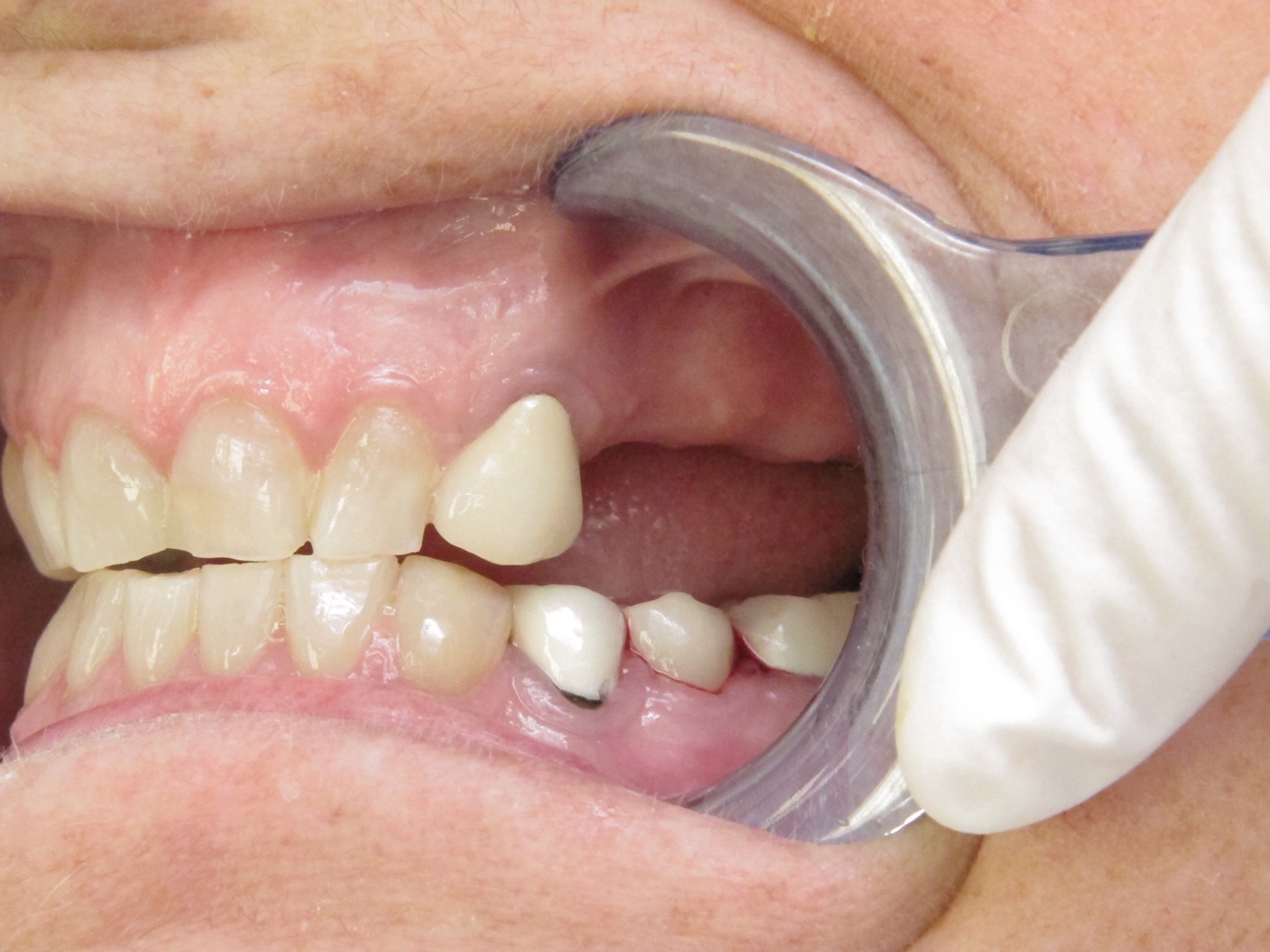
The patient came to our office with several teeth missing toward the back of their mouth. Their molars had been gone for many years. Over time, the patient had begun to notice changes that often accompany tooth loss. Chewing required more effort, meals took longer, and most of their chewing had gradually shifted to one side.
During the exam, we were able to see why those changes had developed. The molars in that area had been missing long enough that the bone that once supported them had started to shrink.
Bone loss like this is common after tooth loss. The roots of natural teeth normally stimulate the jawbone during chewing. Once those roots are gone, that stimulation disappears and the bone gradually begins to lose volume.
As the teeth in that area and their supporting bone were lost, that side of the mouth became less able to handle chewing forces. Over time, the patient began relying more on the other side when chewing.
Molars provide much of the support that keeps the bite balanced during chewing. Without them, the remaining teeth must adjust to carry more of that workload. Over the years, that shift can place additional stress on the remaining teeth and make chewing less efficient.
Rebuilding Support With Dental Implants
With those factors in mind, we discussed how to best restore support in that part of the mouth. We explained how replacing the missing molars would help rebalance the bite and allow the patient to chew more comfortably on both sides again.
In this case, dental implants provided the most reliable way to replace the missing teeth. By positioning implants where the molars once were, we could replace the missing tooth roots and create a stable foundation for their new teeth. This approach allowed us to restore the strength and stability that those back teeth once provided.
Dental Implants Before and After: Inside the Treatment Plan
Preparing for Treatment
Before beginning treatment, we determined which areas would allow the implants to provide the best support for replacement teeth. Each implant must be positioned in areas of strong bone so it supports the bite comfortably and distributes chewing pressure evenly across the back of the mouth.
To guide those decisions, we used a CBCT scan, which provides a three-dimensional view of the jawbone and surrounding teeth. This imaging helped us pinpoint the best locations for implant placement.
All of this planning took place here at our practice. The imaging, treatment planning, and design of the replacement teeth were coordinated through our Shatkin FIRST laboratory, our in-house dental lab. Keeping the process under one roof gave our team direct oversight as the case moved forward.
Our clinical team reviewed the scans, and our laboratory technicians used that information to refine the design of the replacement teeth so everything would work together as the treatment progressed.
Placing the Mini Dental Implants
At Aesthetic Associates Centre, we primarily use mini dental implants and place them using the Shatkin FIRST® technique, which was developed by Dr. Todd Shatkin. With this approach, we guide the narrow implant directly into the jawbone through a very small entry point in the gums. This gentle method allows us to place the implant without invasive surgical techniques.
At the beginning of the procedure, we created a small pilot hole in the bone. That opening served as a guide for the implant. From there, we gently threaded each mini dental implant into the jawbone, following the positions we had mapped out during the planning stage.
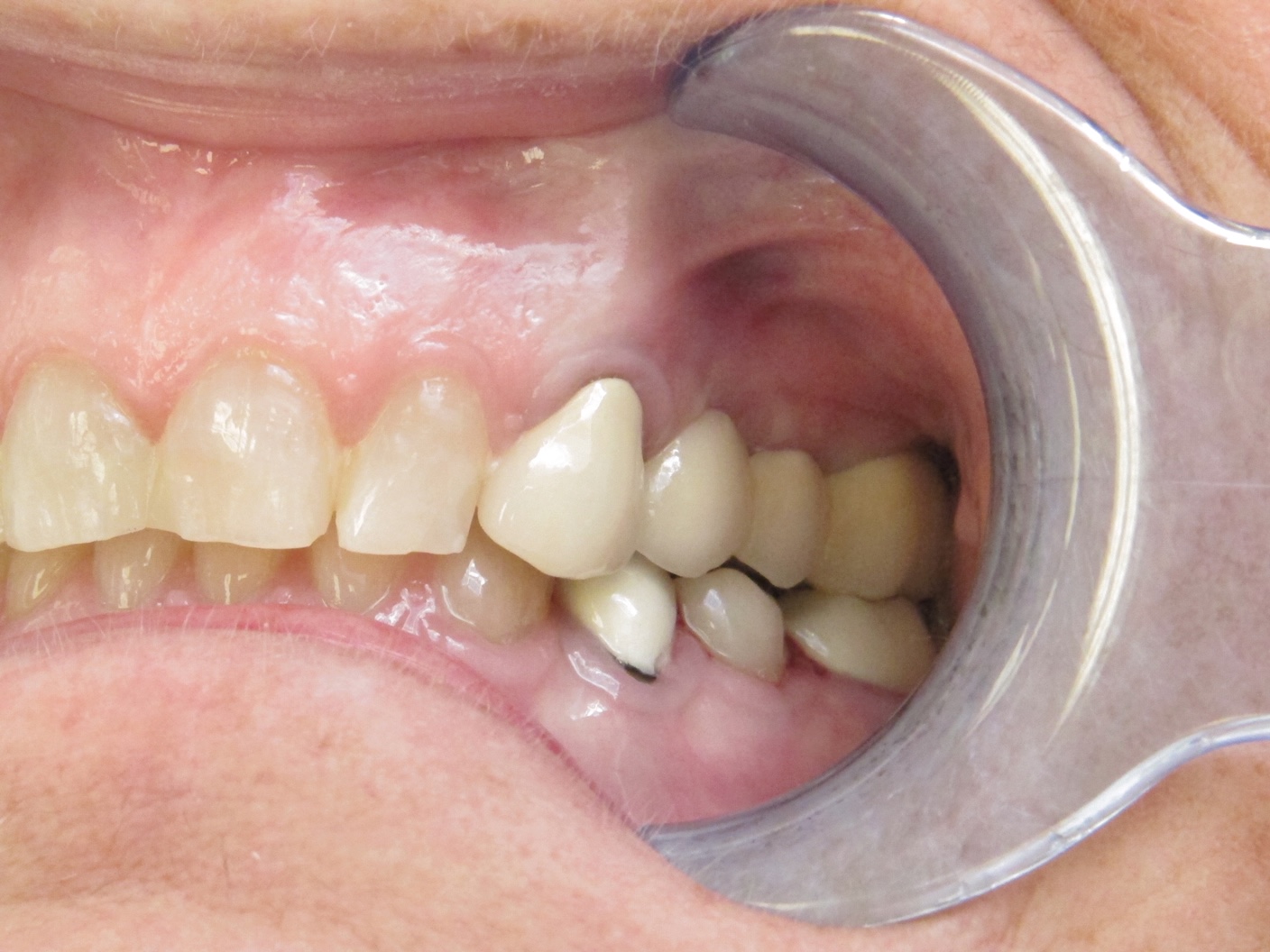
In this patient’s case, we placed three mini dental implants to provide a stable foundation for a three-unit (three teeth) bridge. The bridge now fills the space where the molars once were, restoring the patient’s bite force and chewing ability.
How Our Patient Described Their Smile Before and After Dental Implants
At a follow-up visit, our patient reflected on what it had been like to live without those teeth. While their gap only showed when they smiled widely, the patient felt the absence every day. Over time, that constant awareness began to shape how they thought about meals and even how they thought about themselves. Something as routine as eating had become a reminder that things were not working the way they once had, and the patient sometimes described feeling older than their age because of it.
After treatment, the patient described a noticeable shift in how daily life felt. The sense of working around that missing space was gone, and ordinary routines felt simple again. Restoring those teeth brought back a sense of normalcy that had been missing for years!
Many of our patients experience similar outcomes. Their experiences are also reflected in research, which shows that dental implants can improve quality of life by restoring the comfort, function, and appearance of missing teeth. Because implants are stable and integrate with the jawbone, many patients find it easier to chew, speak, and eat without irritation or movement. As a result, patients often report less discomfort and greater confidence in daily activities like eating and socializing.
Let’s Talk About Restoring YOUR Smile
In this patient’s situation, the missing teeth sat mostly out of view. But their absence changed our patient’s ability to eat and enjoy their favorite meals for years. By carefully planning the treatment and restoring the area with implants and a fixed bridge, our team was able to rebuild the missing support. The result was a noticeable difference in the patient’s comfort and confidence at mealtime and beyond!
If you have been living with missing teeth and wondering what restoration might involve, it’s time to take the next step. Book a free consultation at Aesthetic Associates Centre to learn how mini dental implants can change your life.
