
There’s an old saying that you lose a tooth for every baby you have, but tooth loss is not an expected part of pregnancy. Your body can draw calcium from your bones to support your growing baby, but it does not take calcium from your teeth. Pregnancy can still affect your oral health, particularly your gums. Changes in estrogen and progesterone levels make your gums more sensitive to plaque. Even with good oral hygiene habits, you may notice that your gums bleed more easily or appear red and swollen. Dentists call this pregnancy gingivitis, a common condition that can usually be managed with proper dental care. Untreated gingivitis can progress to periodontitis, a more serious form of gum disease that damages the tissues and bone supporting your teeth.
At Aesthetic Associates Centre in Buffalo, NY, we help patients recognize the signs of gum disease, manage inflammation, and maintain healthy gums throughout pregnancy.
What Causes Pregnancy Gingivitis?
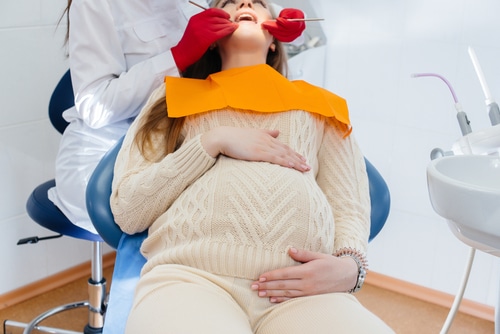
While you are expecting, rising estrogen and progesterone levels change how your gum tissue responds to bacteria. Plaque that previously caused little irritation may now trigger a stronger inflammatory reaction, even if you brush and floss as consistently as before.
This reaction involves the blood vessels that supply your gums. Hormonal changes increase circulation and make these vessels more permeable, which means fluid can pass into nearby tissue more easily. As swelling develops, your gums may appear redder than usual, feel tender to the touch, or bleed during your normal oral hygiene routine.
These hormones also affect the small blood vessels in your gums, increasing blood flow and allowing more fluid to collect in the surrounding tissue. Combined with a heightened inflammatory response to plaque, these changes can leave your gums red, swollen, tender, and more likely to bleed when you brush or floss.
Pregnancy hormones don’t cause gingivitis on their own. They change how your gums respond to plaque, which explains why you might notice inflammation even when you’re taking good care of your teeth.
Morning sickness can also complicate your oral hygiene routine. For some women, brushing their teeth triggers nausea or gagging, especially during the first trimester. Frequent episodes of morning sickness can also expose tooth enamel to stomach acid, increasing the risk of erosion. If you’re struggling to brush comfortably, try using a soft-bristled toothbrush with a smaller head and a mild-flavored fluoride toothpaste.
How To Manage Pregnancy Gingivitis
You can’t prevent the hormonal changes that contribute to pregnancy gingivitis, but you can reduce the plaque buildup that triggers inflammation. Removing plaque consistently is still one of the most effective ways to control inflammation. Brush for two minutes twice a day with fluoride toothpaste and a soft-bristled toothbrush, gently cleaning where your teeth meet your gums. Daily flossing helps remove bacteria from the spaces your toothbrush can’t reach. Even with careful brushing and flossing, however, hormonal changes may leave your gums more sensitive than usual.
Some plaque inevitably escapes your daily cleaning routine. Over time, it can harden into tartar, which requires professional instruments to remove. At our Buffalo office, our dental team can remove these deposits, examine your gums for signs of inflammation, and identify changes you may not have noticed. If pregnancy gingivitis develops, we may suggest more frequent cleanings to keep plaque and tartar under control.
Keep Your Gums Healthy Throughout Pregnancy
Pregnancy comes with plenty of changes, and bleeding or swollen gums may be one you weren’t expecting. If you’ve noticed these symptoms, don’t wait until they become more uncomfortable. At Aesthetic Associates Centre in Buffalo, NY, our dental team can evaluate your gum health, remove stubborn plaque and tartar, and recommend care suited to your needs during pregnancy.
Contact our office to schedule a dental visit. We’re here to help you care for your teeth and gums throughout your pregnancy.
